This 2026 marketing checklist is designed to help local and small businesses focus on high-impact, authentic, and hybrid (digital + physical) strategies; including what NOT to do!

By Ed Carter at ablefutures.org
This 2026 marketing checklist is designed to help local and small businesses focus on high-impact, authentic, and hybrid (digital + physical) strategies; including what NOT to do!
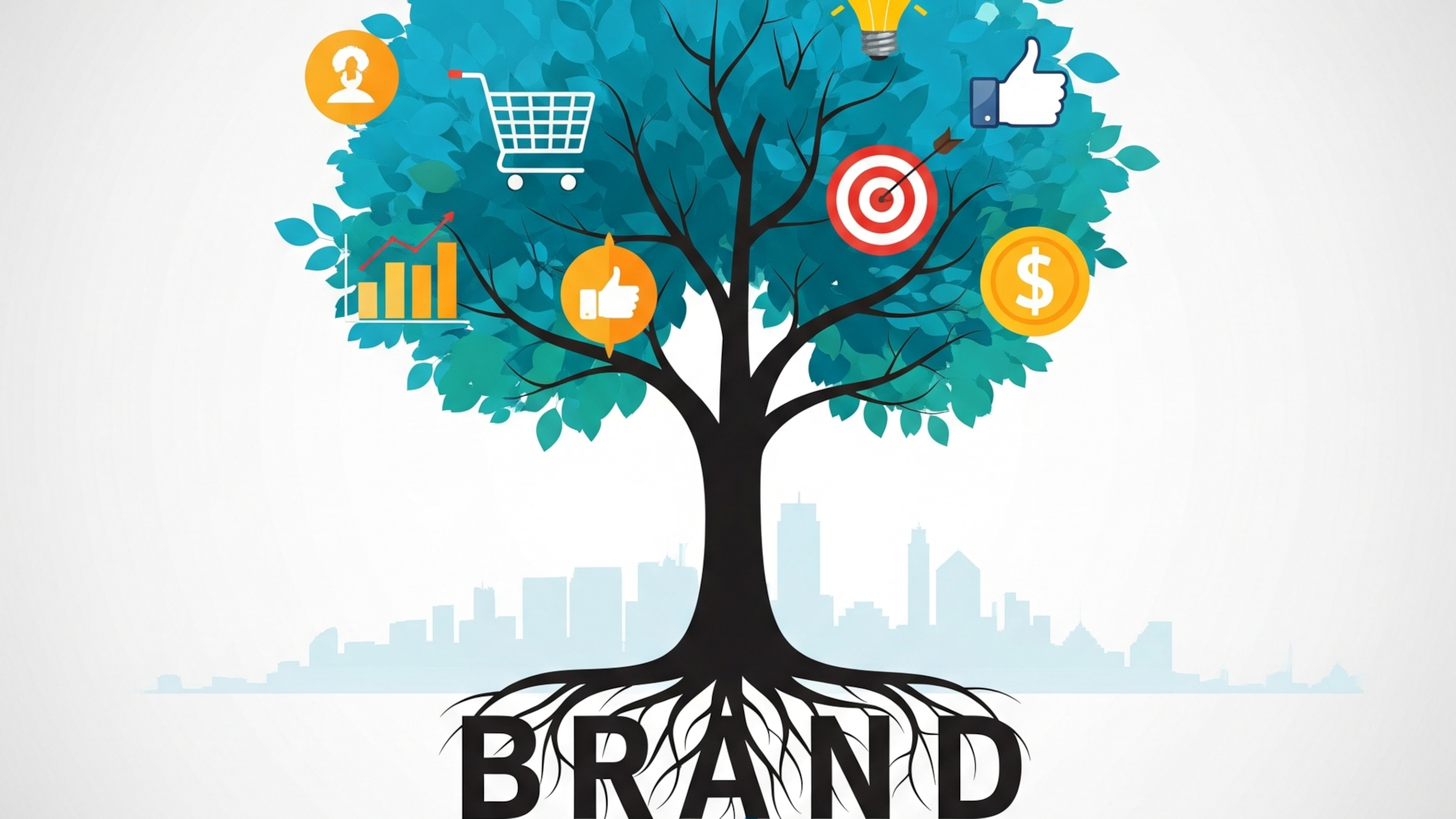
Branding is more than just a logo; it’s the story, personality, and heartbeat of your business. When done right, it makes people feel like they belong with you. For small business owners, the challenge lies in carving out a space that feels authentic while also standing out in a crowded marketplace.
By Ed Carter at ablefutures.org
Branding is often the divider between a successful business and a middling one, and yet it’s still a commonly overlooked aspect of the work process by many entrepreneurs. Much of the reason for this comes down to a misunderstanding of what branding is and how to manage it consistently. In this first-look guide, Sign Biz explores its definitions, the way it can affect consumer interactions, and how to begin implementation.
In a sentence, branding is the identity of your business in the minds of the consumer. It is both critical for your business’s long-term success and challenging to get right. Developing a solid brand requires commitment, planning, and diligent work.
The question, then, is how can we shape and mold this identity in a way that is favorable for the company and, ultimately, its bottom line? For generations, brands have achieved this with the best creative talent. A few hundred highly-skilled copywriters, graphic designers, and marketing managers working in sync can sculpt a brand identity that is unmistakable in the mind of the consumer.

Your brand’s values are the guiding principles. It helps if you and your team also believe and abide by these values – often, companies will suggest they stand for one thing and then, internally, do something else. Your brand values will endear you to different sets of consumers, as well as affect business decisions and PR activity.
Your brand’s voice alludes to the way your brand speaks to its customers/clients through marketing and in all external-facing, company-related media. It should be built to reflect your key demographics and to help drive internal company OKRs (objectives and key results). This means that you have a set tone of writing and a specific lexicon that your writers will draw upon. If you are a B2B financial consultancy, this is more likely to be formal, jargonistic, and direct. If you are a consumer-facing teenage makeup brand, you may opt for something more casual and laissez-faire.
As the consumer’s first touchpoint, the design of your brand is arguably its most important component. Modern consumers will form a perception of your company immediately based on the colors you use, the shape of your typography, and the style of your logo. This is why it’s crucial to know exactly who you’re targeting, their preferences, their spending habits and to craft aesthetics around this data.
It’s important to note that all three branding components feed off one another. Ideally, your brand values should affect the way your company looks, and occasionally the way your company looks can feed back on the way it sounds or the things it purports to believe.

If you’re on a shoestring or you’re confident enough in your own artistic sensibilities, it’s also possible to do much of the legwork on your own. For example, you can sketch out and provide examples of logos you like, then ask your local sign shop designer to build a logo for you. The shop professionals know good design, effective logotypes. You could also try following one of the many online guides to craft your own brand voice — employing it across social media and on your company site.
Once you have the foundations of branding in place, you’ll often find that the next steps (to do with marketing, sales, customer service, etc.) reveal themselves. For now, your main priority should be to craft a truly unique, personal identity that resonates with clients/customers and to stick with it consistently.

Credits: Photo Top- Pexels, Eva Bronzini
When Thomas purchased his original sign shop in December of 2008…
Something that designing men have discovered is that a visual communications business fits their artistic sensibilities. That was the case for Michael Martini, a very successful corporate executive and chief bread-winner for his four kids – ages 6,8,11, and 12 – and for his wife, a woman who works hard at home to maintain the good life in Tennessee. Michael, with a degree in Industrial Engineering and 27 years at a Fortune 500 company leading business segments, was a man that began to sense he was more than a cog in a machine. He kept seeing something more engaging outside the corporate box.
“I’ve always had a passion for good color, great logos and design. It started as simply appreciation for the power of images,” he explained. So early in 2014, Michael set out on a journey of exploration but kept his day job. He began exploring options, and discovered the sign industry’s depth, complexity and versatility. This was a business that could harness the vision that was beginning to take shape in Michael’s mind. The image of a business that served up graphics without limitations.
Immediately, like so many other would-be entrepreneurs, he recognized that he did not want to simply “wing it.” There is no guidebook, no map or set of instructions for any man or woman who one day wakes up, literally and figuratively, and wants to take on the challenge of business ownership. That is why research plays such a large role – especially early on – in the quest for a new business, and a model to follow.
In time, Michael found a solid partner with three decades of experience and the structure he envisioned for his business. He found Sign Biz, Inc. After extensive due diligence, a few months into his journey to entrepreneurship, he signed on the dotted line and boarded what would be a six month roller coaster ride of site selection, name selection, logo development, business plan tweaking and site build-out planning.
 Years of strong managerial acumen came to bear, and as the weeks progressed, Michael brought his vision to life – ImageLife – a shining example of what a visual communications business can be. As he picked out colors for the walls of his new lease site, strenuously examining the pallets and using a Sherwin Williams online color rendering utility, his sense of purpose clarified. Image Life would be an extraordinary sign business, offering high-impact and even rare images for any wall, any surface, and any floor. The shop began to take shape as Michael trusted in his vision and direction. He attacked his mission statement with the same sense of purpose, until there was clarity. He knew he was in this business “because images impact life!”
His business opened officially in February of 2015, and his Grand Opening Celebration took place on April 1st. Since opening, the journey has continued to be rewarding. Michael won “Best in Show” in the Ace of Space competition judged in Las Vegas, NV at the Sign Biz International Convention just two months ago. See his winning entry here on YouTube for some true inspiration.
The authentic life of an entrepreneur is one that fulfills and challenges Michael, allowing him to build on his business experience while at the same time giving him the chance to celebrate what it means to let true colors shine through. Michael Martini can be reached at ImageLife Signs and Graphics, 921 8th Ave South, Nashville, TN. Phone: 615-970-6200.
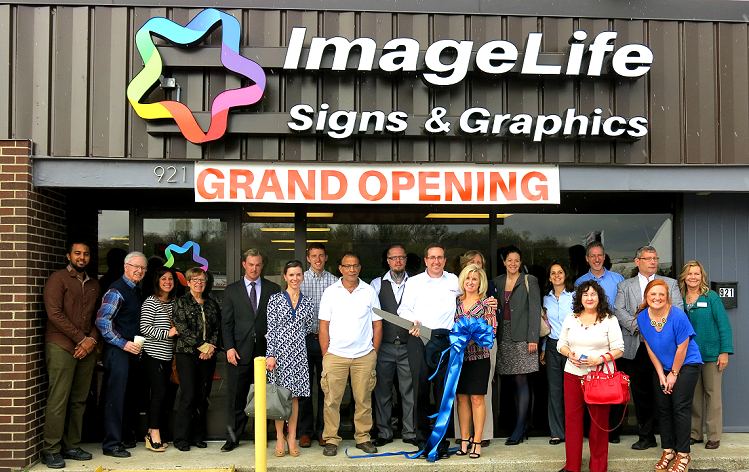
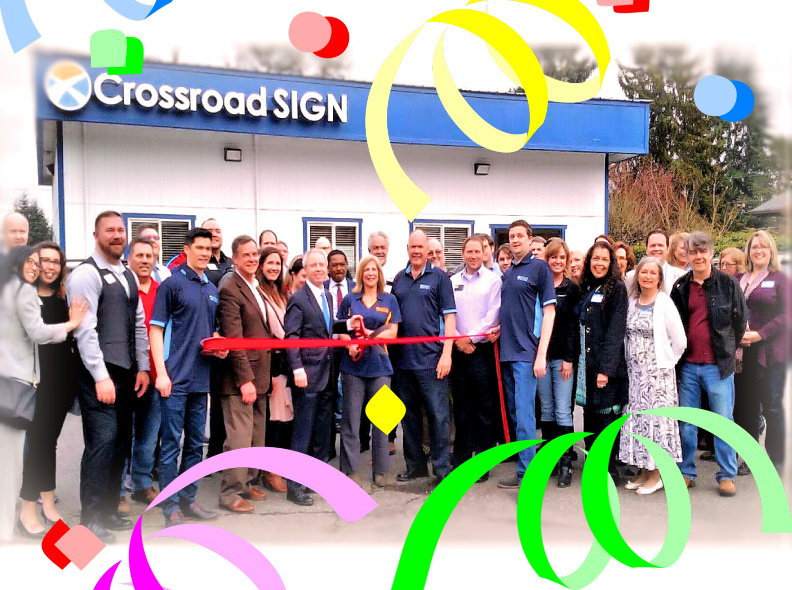
Representatives from the Nashville Chamber, Small Business Development Center, friends, family and current customers joined in the Grand Opening celebration on April 1, 2015.
We are fortunate to have a veteran of web development on staff here, so this question, “What is SEO?” never had to be asked. But it should be asked. It is as important a question as “How are my customers finding me?” or “When should I hire a new employee?” This is an article for busy business owners who want to be sure they understand the basics of SEO. It is important for every business owner, and SEO will continue to grow in value until it is “the water we swim in” and no “bad” websites ever show up in search! At the same time, we know you don’t have a lot of time to spend “cracking the books.” So, let’s cover the most important elements of SEO for you today. First of all, SEO stands for “Search Engine Optimization.” This is exactly what it infers: A way to make your web real estate easier to find, and more desirable for search engines. The most widely used search engine is, by far, Google. So in reality, SEO should satisfy what Google wants. So what does Google want? According to Google’s quality guidelines, there are three overall factors. Here is the short version, so you can get back to work:
1) Design & Content – should be really valuable, good, hearty and satisfying information. Keep links to a modest number. Minimize the use of images to tell your story. Why avoid using images as a crutch? Because search engines don’t know what that image is “saying.” For those images, use an “alt” tag to convey that content.
 2) Technical Guidelines – this can be pretty overwhelming for those that don’t build websites for a living. Here are the top priorities: A) Make sure your site works in mobile devices. This is called a “responsive” website – meaning the top navigation links should probably fold up into a little accordian for the touch of a finger. Fonts should not shrink too far, but images should resize to fit the screen width. B) Clearly direct robots to keep away from pages that don’t contain the kind of content people would visit your site to find such as login pages, or archives. Direct the robots via a little text file loaded by FTP to the root of your website. This Wikipedia page has a wide variety of examples you can use as needed, plus instructions. C) Make sure your site loads fast. 40% of visitors abandon a website that takes more than three seconds to load! Test your site here.
3) Quality Guidelines – keeping this a clear and simple definition for all non-webmasters out there, what this boils down to is this: Build your site’s information for real people first, then consider search engines. In fact, Google offers a great piece of advice, as follows: “A good rule of thumb is whether you’d feel comfortable explaining what you’ve done to a website that competes with you, or to a Google employee. Another useful test is to ask, “Does this help my users? Would I do this if search engines didn’t exist?”
So that is in a nutshell what you need to think about. Focus on authenticity and transparency. Provide real and valuable information that really addresses a need of fellow humans. If you do this legitimately, Google will find you. You will be ranked appropriately, based on freshness of that information, the quality, the ease of your page to navigate, and understanding website basics.
Oh, and next article in this series, we will review, in layman terms, what SEO is NOT, and what will get you penalized. So, stay honest, my friends!
It has long been stated that “location, location, location” is vital to the success of many – if not most – businesses. This is equally true for a professional sign shop that is newly established or in early growth phases, in particular, for those that offer digital print and cut vinyl products as a mainstay. Outgrowing the space? There’s research for that, too.